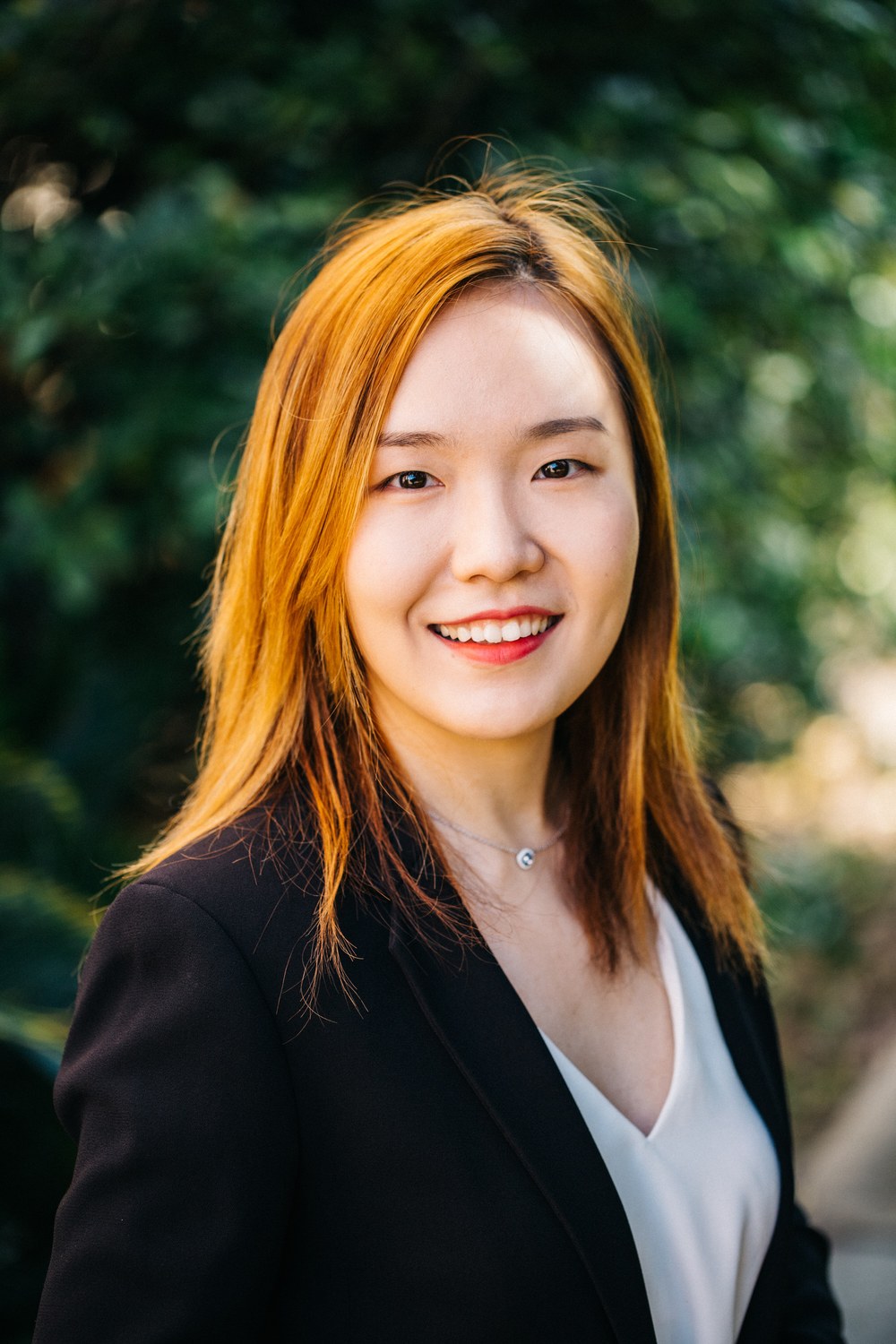
Assistant Professor · University of Virginia

Reconstructinghidden physiology.

I develop physics-aware and data-efficient AI that integrates medical imaging, physiological sensing, and mechanistic modeling to recover clinically meaningful dynamics from sparse, indirect, and imperfect observations.

Observe sparselyReconstruct intelligentlyModel physiologically
OBSERVEPhysiological sensingMedical imaging
RECONSTRUCTPhysiological state estimationOutcome predictionPrecision care decisions
MODELPhysics-informed learningSimulationComputer visionAI agentsBayesian optimization

01 · Research vision

Across cardiac modeling, biomedical imaging, and glucose monitoring, my research asks a common question: how can we reveal what cannot be measured directly?

02 · Research directions

Three views of one problem.

Each direction translates incomplete observations into structured, interpretable representations of physiological state.

01

Flagship program

Cardiac Digital Twins & Inverse ECG

A new point-cloud paradigm for connecting cardiac anatomy, electrical activation, myocardial motion, and noninvasive sensing.

3D point cloudsInverse problemsActive sensingElectromechanics
1.2

Active sensor selection

Inverse ECG

Which body-surface regions carry the most important information, and how does their importance distribution affect reconstruction of cardiac electrical activity?

Invasive mapping

During procedures such as catheter ablation, when only a limited number of measurements are available, how should sensors be distributed to best localize abnormal activation?
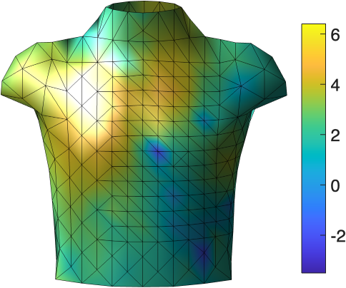
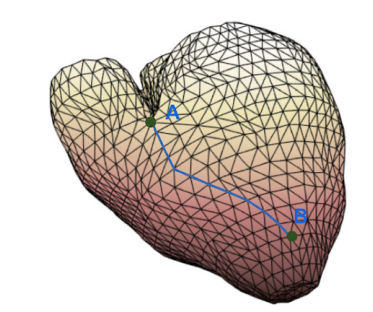
Click either figure to read the related paper.
1.3

Point-cloud 3D representation

Traditional cardiac models use surface meshes or volumetric tetrahedral and hexahedral meshes. Surface-only models cannot resolve transmural dynamics or volumetric septal tissue, while finite-element meshes can suffer from poor element quality and distortion during deformation. We therefore develop a point-cloud heart representation with persistent material points for image-guided electromechanical modeling.
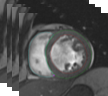
Cine CMR short-axis image sequenceCine CMR
Surface motion
Point-cloud electromechanics
02

Computer vision for scientific imaging

Learning from dynamic and noisy images.

Scientific images often contain motion, limited labels, and domain-specific noise that conventional computer-vision models do not handle reliably.

Research overviewComputer vision for scientific imagingCMR cine analysis and unsupervised STM image denoising.Coming soon
03

Recovering insight from sparse measurements

Inferring what was not continuously observed.

Finger-stick SMBG records only a few irregular glucose values each day. The challenge is to recover continuous glycemic patterns and estimate time in, above, and below range without a continuous glucose monitor.

03 · Selected publications

Methods, evidence, translation.

View full Google Scholar profile

04 · Mentorship

People behind the questions.

Mentoring researchers across data science, engineering, computer science, and cardiovascular medicine.

Portrait of Jianxin Xie

Principal investigator

Jianxin Xie, Ph.D.

Assistant Professor · School of Data Science · University of Virginia

I develop physics-aware and data-efficient AI for cardiac digital twins, biomedical imaging, physiological sensing, and digital health—connecting mechanistic models with modern machine learning to reconstruct clinically meaningful hidden physiology.

Education

2023 · Ph.D.Industrial & Systems Engineering
The University of Tennessee at Knoxville, USA
2020 · M.S.Industrial & Manufacturing Engineering
Florida State University, USA
2016 · B.S.Physics
Southeast University, China

Chuankai Xu

PhD Student

Multi-modal foundation models for cardiac disease analysis

Canyu Lei

PhD Student

Point-cloud-based physics-informed cardiac digital twins and representation learning

Alex Xie

Undergraduate Student

Undergraduate research

Elmira Ahmadinedamani

Cross-Institutional Mentee · Oklahoma State University

Machine learning for healthcare systems

Work with us

Interested in physics-aware AI for health?

Motivated students and collaborators interested in cardiac digital twins, medical imaging, and sparse health data are welcome to get in touch.

Contact Jianxin